TL;DR
- Inherited a funded but stalled redesign of a legacy app and shipped a build-ready new front-end plus a documented design system.
- The hard part wasn't drawing screens — it was getting a direction committed to. Unblocked it by pivoting to an AI-driven workflow: three directions built in Claude Design to lock the decision, then a Claude Code prototype to hit the deadline.
- Delivered two build-ready files — an interactive prototype and a design system — that define DealSage's new interface.
The Challenge
The app worked, but looked like Microsoft Access circa 2000. Design hours were approved; the hard part was everything around the work.
- No committed direction. Early on there were no clear requirements. With the product lead defining what to build, I owned how it looked and worked — translating rough, requirement-light ideas into designed screens, getting them signed off, and building them out in Figma.
- The decision-maker was unavailable. A new CTO came on and championed the redesign — but he was heads-down on a backend migration, so every attempt to lock a visual direction kept slipping.
Plenty of design was happening. What was missing was a decision.
The Solution
- Switched approach to unblock the decision. Figma iterations weren't landing a call with this CTO. So instead of running more rounds, I built three distinct directions in Claude Design (an AI design tool) for him to react to rather than critique in the abstract. A few iterations later, we locked one.
- Switched tools to beat the deadline. With a direction agreed and time short, I moved off Figma into a Claude Code prototype (AI-assisted coding) — far faster to iterate on and apply feedback to. I took the agreed direction, wired in a component library (shadcn/ui), and iterated relentlessly — more prototype versions than I could count — until the new front-end existed as a working product, not a mockup.
- Shipped a foundation, not just screens. The output was two build-ready deliverables: an interactive prototype and a documented design system engineers can build straight from.
Key Decisions
-
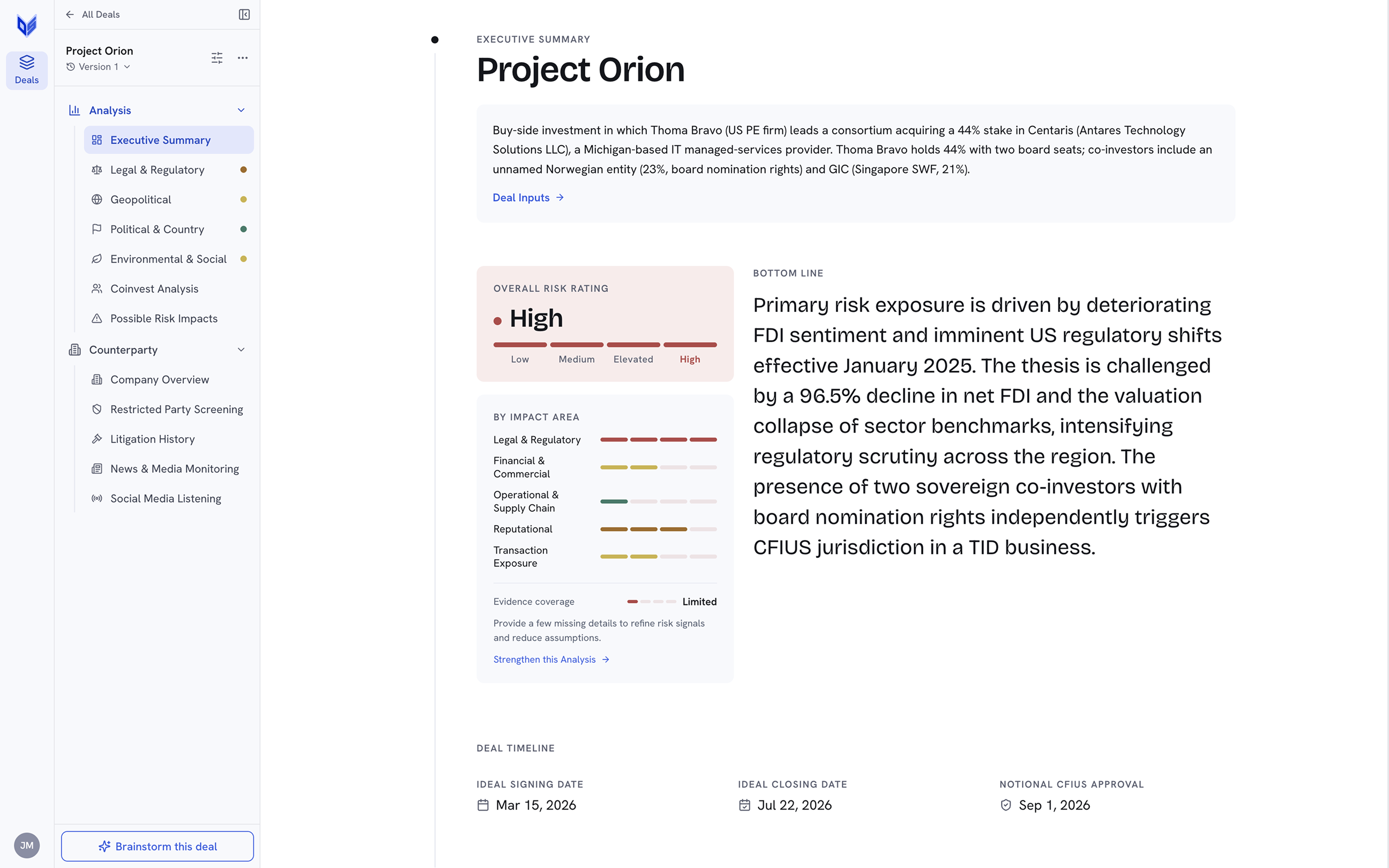
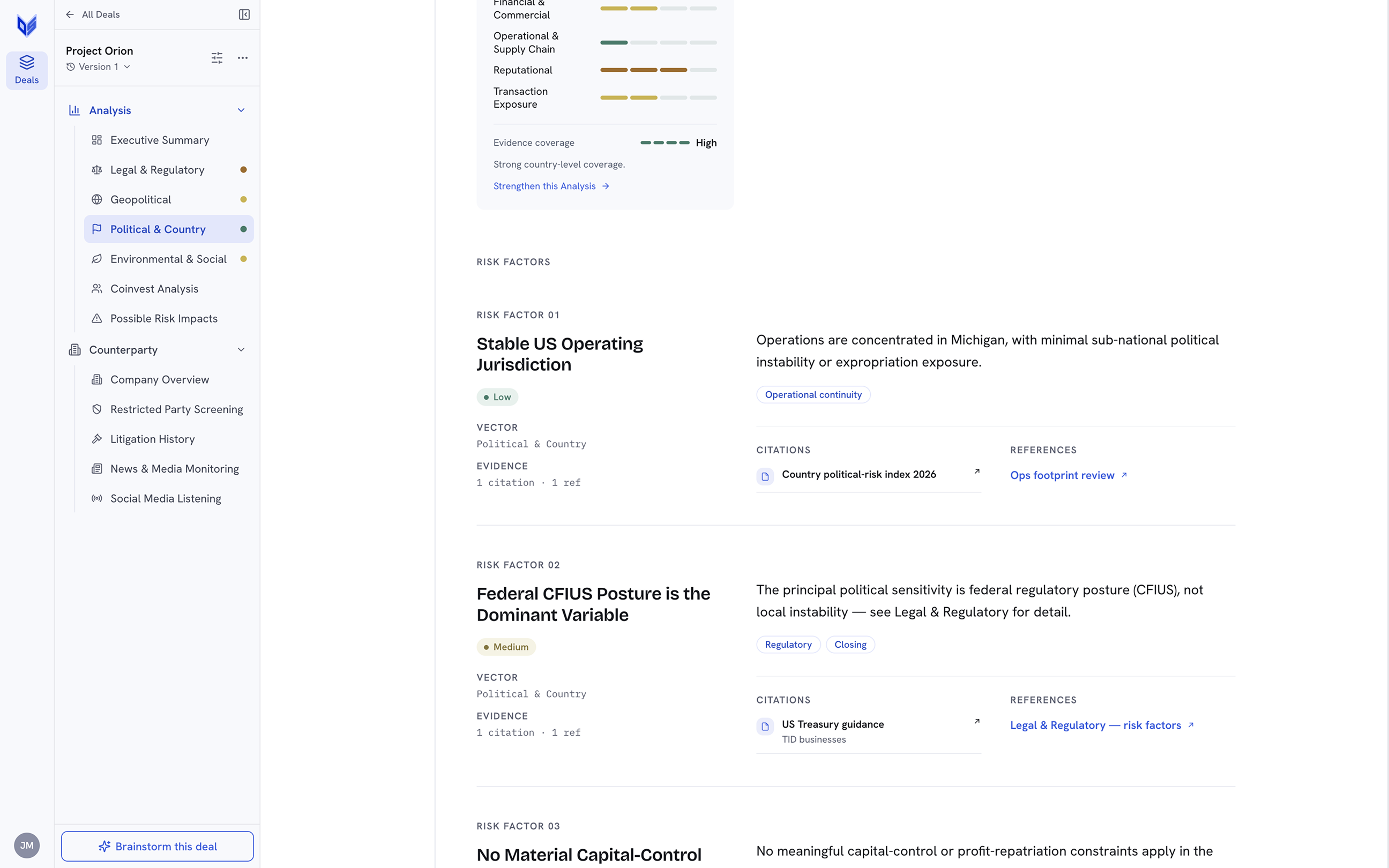
Made a text-heavy deal navigable with scroll-spy
- Problem
- A single deal is a wall of information — seven risk areas plus the counterparty.
- Decision
- Kept it as one long workspace with a left rail that tracks scroll position and jumps you anywhere, instead of splitting it across tabs. Proposed it; the stakeholder was sold on the spot.
- Where
- Deal view
-
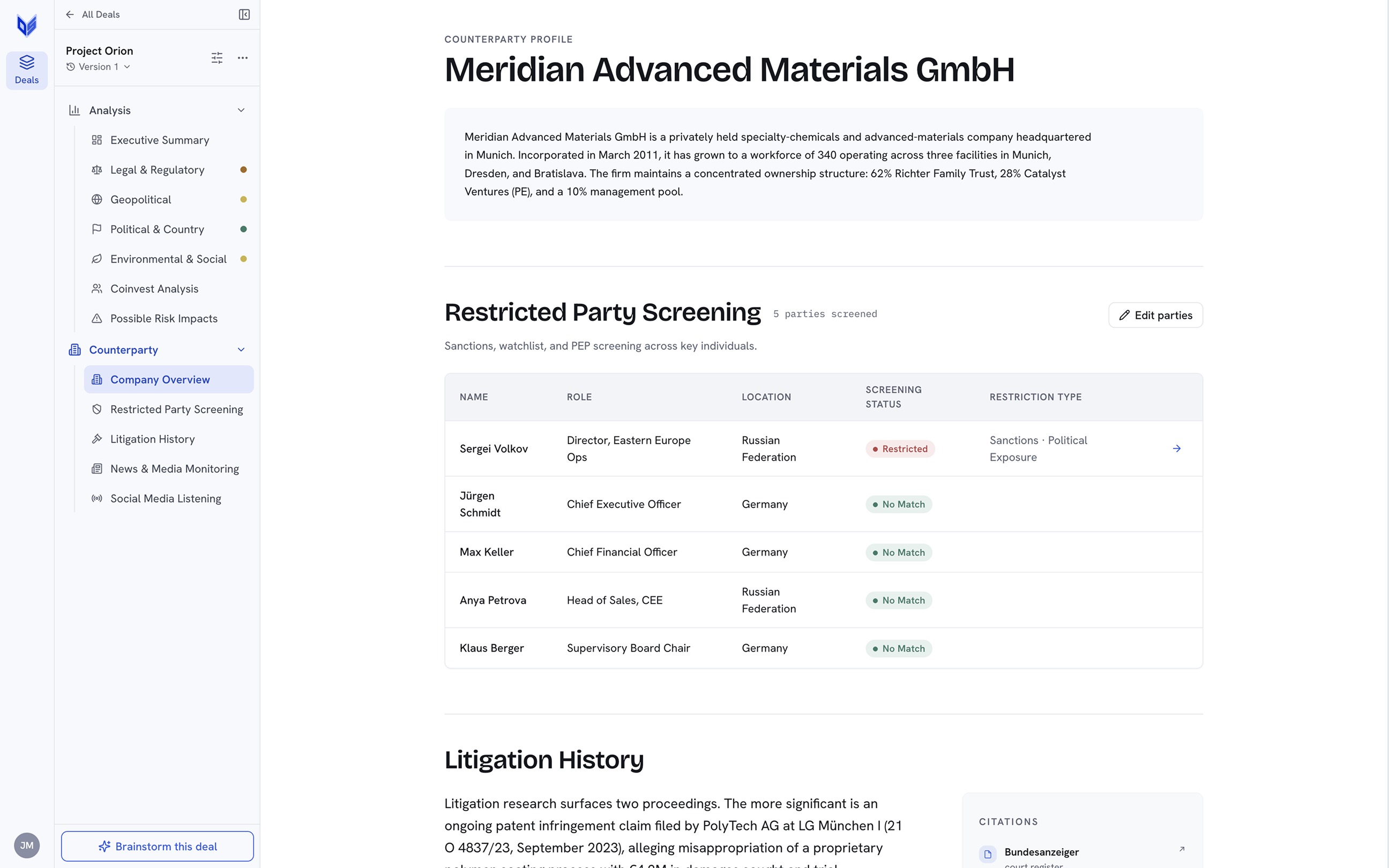
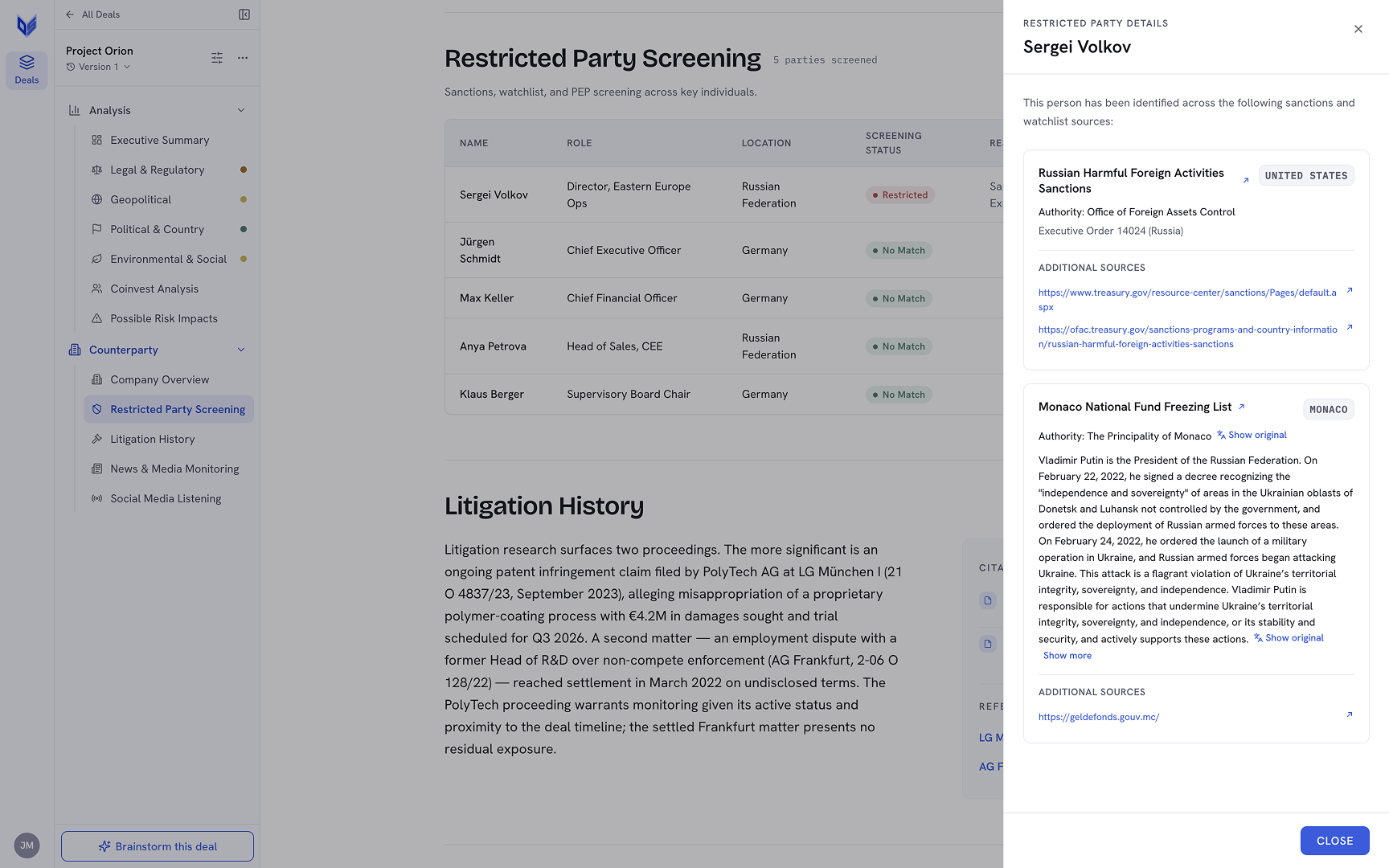
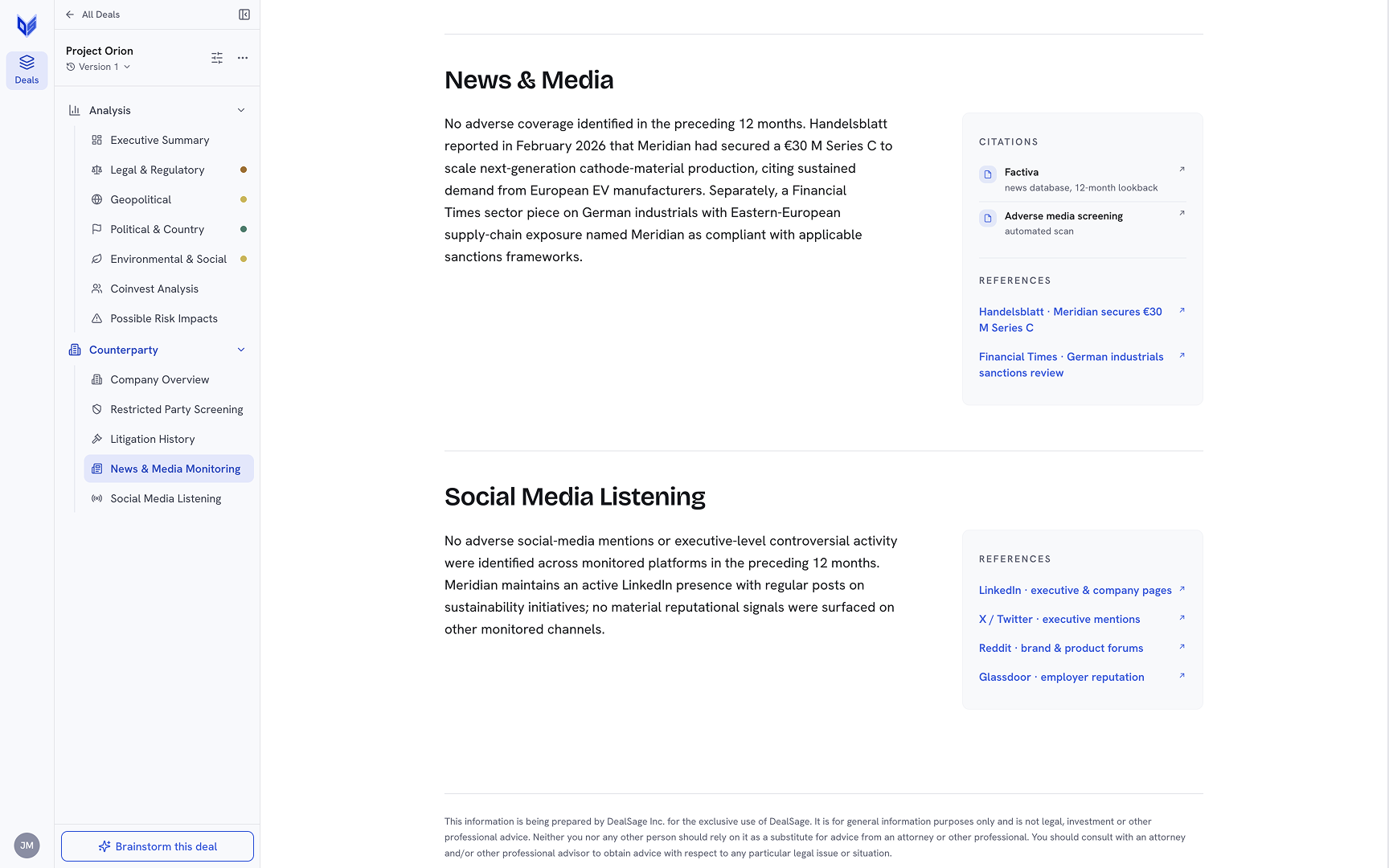
Made every AI finding traceable to its source
- Problem
- The product's output is AI-generated risk analysis, and no one senior acts on a verdict they can't check.
- Decision
- Each finding carries its severity, evidence count, and named sources — findings you can trace, not summaries you have to trust.
- Where
- Risk findings
-
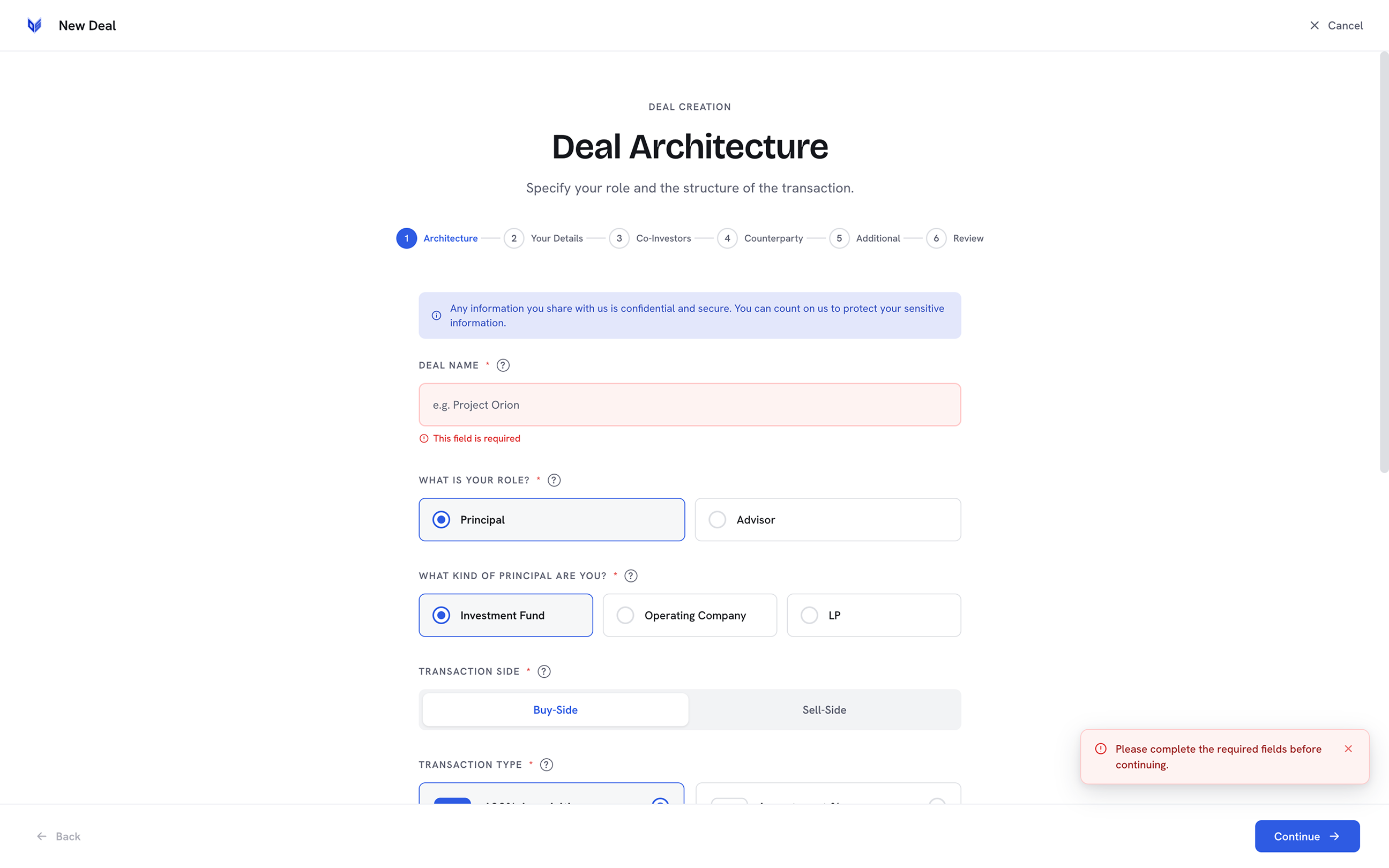
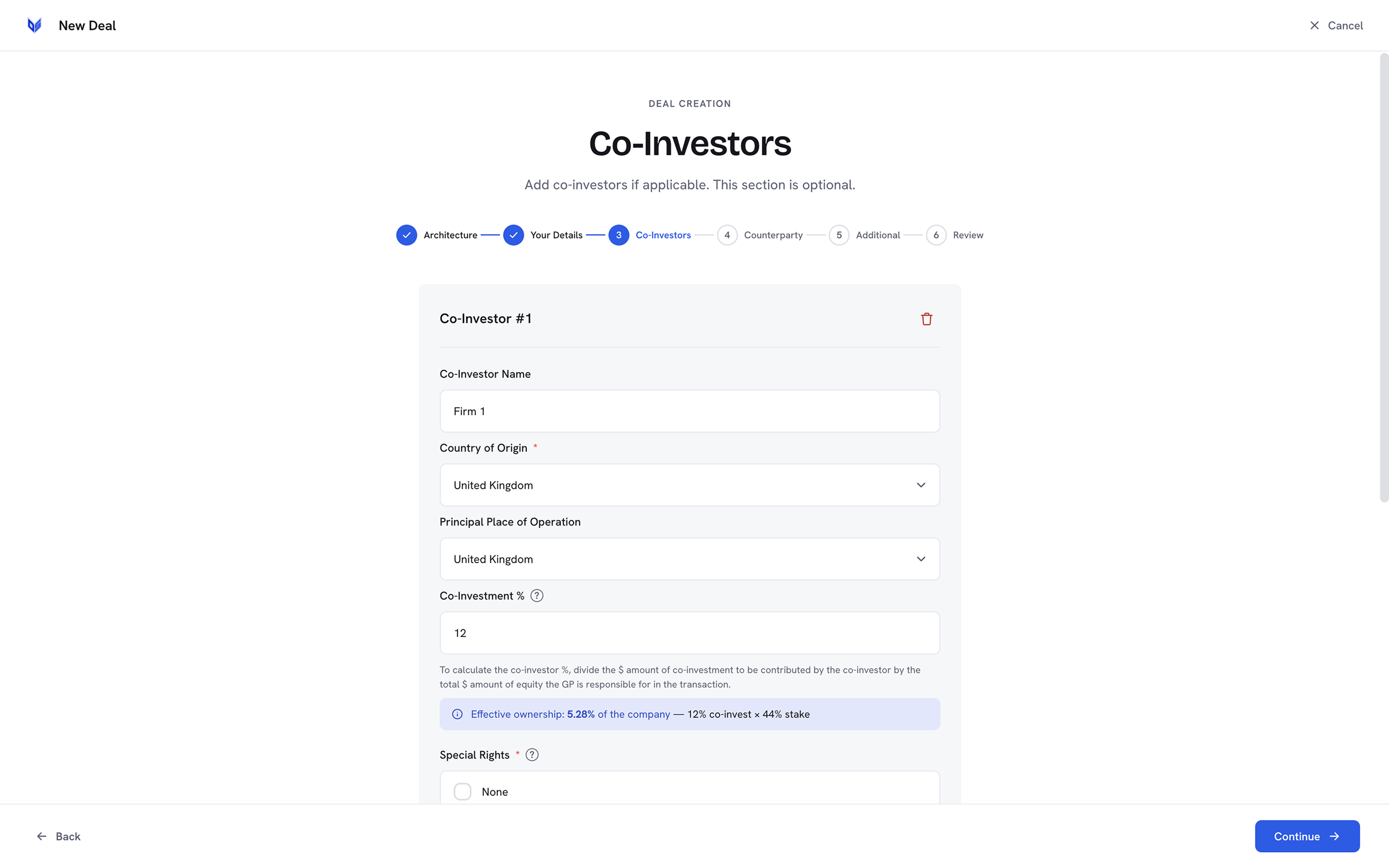
Turned deal setup into a guided six-step wizard
- Problem
- One intimidating form for deal setup.
- Decision
- Six-step wizard — architecture, your details, co-investors, counterparty, context, review.
- Where
- Deal setup
-
Muted the risk palette so it reads as judgment, not alarm
- Problem
- Long interactions with a lot of semantic colours create cognitive overload.
- Decision
- Desaturated tones, with saturated colour reserved for meters and status dots, never text.
- Where
- Visual system / risk palette
-
Designed one layout for two readers
- Problem
- The firm hadn't yet decided whether the General Counsel (reads top-to-bottom for the bottom line) or the analyst (drills into specifics) comes first.
- Decision
- One layout serving both readers.
- Where
- Deal view layout
Outcome
- A stalled redesign got a committed direction and a build-ready front-end.
- Made a text- and data-dense product approachable for first-time users, not just power users — validated by positive pilot-customer feedback and buy-in from stakeholders who'd been skeptical of the redesign.
- Shipped a documented design system the team can extend without me.
- Replaced a dated interface with a modern design language for the product.
- The client was happy with the outcome, and specifically valued how the AI-driven approach turned a stalled redesign around quickly.
What I Took From It
When Figma iterations weren't landing a decision, I switched approaches — three AI-built directions the CTO could react to, and we locked one. The habit I kept: match the process to the person and the deadline, not the other way around.
A stalled, funded redesign got unstuck through an AI-driven direction-and-prototype workflow, landing a build-ready front-end and design system for a PE deal-intelligence tool.
Some details generalized for confidentiality.